
How to stay safe from online scams
Never reveal personal information to strangers. Use secure passwords, enable two-step security, carefully review links, and confirm any messages with reputable sources.
BLOG
Harsh Garg
7/28/20262 min read
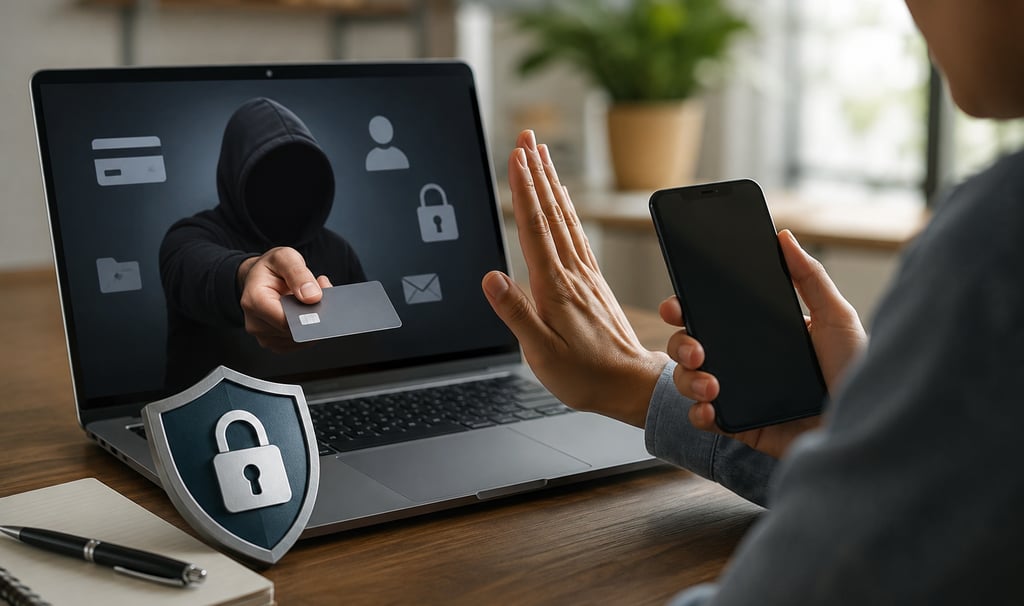
The simplest way to avoid online scams is to slow down, verify, and react. Scammers' main weapon is urgency—they need us to make a decision and get an OTP, a password, and personal information. If a message, call, email, or offer appears suspect, stop it, check it, and take appropriate action. According to security authorities' instructions, personal information should not be shared in response to unwanted requests, links/attachments should not be clicked blindly, and suspicious contacts should be verified independently.
How online scams work
Scammers often try to get you to act quickly. They may pretend to be your bank employee, a delivery service, a government office, a job recruiter, or even a family member in distress. They usually send fake emails, texts, calls, social media messages, or links that appear genuine but are intended to steal your money or personal information. Their purpose is to create pressure so that you don't have time to think.
Simple way to stay safe
Never share passwords, OTPs, PINs, or bank information with anyone who calls you suddenly. If someone pretends to be from a corporation or bank, do not use the phone number or link they provide; instead, contact the genuine company via a reputable website or statement you already have. Turn on two-step or multi-factor authentication for your key accounts to add an extra layer of security.
Keep your phone and computer up to date, and use security software where possible. Use unique, strong passwords for each account to ensure that a single leak does not expose everything. Links, attachments, QR codes, and software downloads should be used with caution because they may include malware or phony login pages.
Warning signs to notice
Spelling errors, unusual email addresses, urgent communications, or requests for confidentiality are all common features of scams. Another red flag is when someone asks you to pay with gift cards, cryptocurrency, or wire transfers, as these methods are difficult to monitor. Offers that seem "too good to be true" are usually scams. If you receive a notification stating that your account will be blocked unless you act immediately, pause and verify before taking any action.
What to do if you are targeted
If you suspect a fraud, stop replying immediately and do not pay any additional money. Take screenshots of the message or call data to retain them as proof. If money or account information is at risk, contact your bank or card provider immediately and change your passwords. Reporting the scam can also help others avoid becoming victims.
Safe habits for everyday use
Make a habit of checking your account statements and transaction alerts on a regular basis. Do not believe a caller simply because they sound official; instead, hang up and call back from a number you already trust. On social media, be cautious of revealing personal information since scammers utilise public information to appear convincing. Scammers will have a more difficult time targeting you if your information remains private.
Important note
A calm mind and a practice of monitoring are the best forms of defence. Do not click, pay, or share anything until you have confirmed the person, message, and request with a credible source. If you remain patient and sceptical, you may avoid most online scams before they do harm.
Follow us on


Smart Money Management is a finance platform dedicated to helping people make smarter decisions about earning, investing, and managing money.
Quick Links
Contact Us

smm@smartmoneymanagement.site
© 2026 Smart Money Management. All Rights Reserved