
India and EU Trade Agreement: Impact on Indian Markets
India and the EU finalized a major trade deal, slashing tariffs on luxury cars and boosting $136-190B bilateral trade. It aids Indian exports in textiles, pharma, auto parts, and IT, potentially lifting Nifty stocks via earnings, FDI, and rupee strength, despite some competition risks.
MARKET NEWS
Harsh Garg
1/27/20261 min read
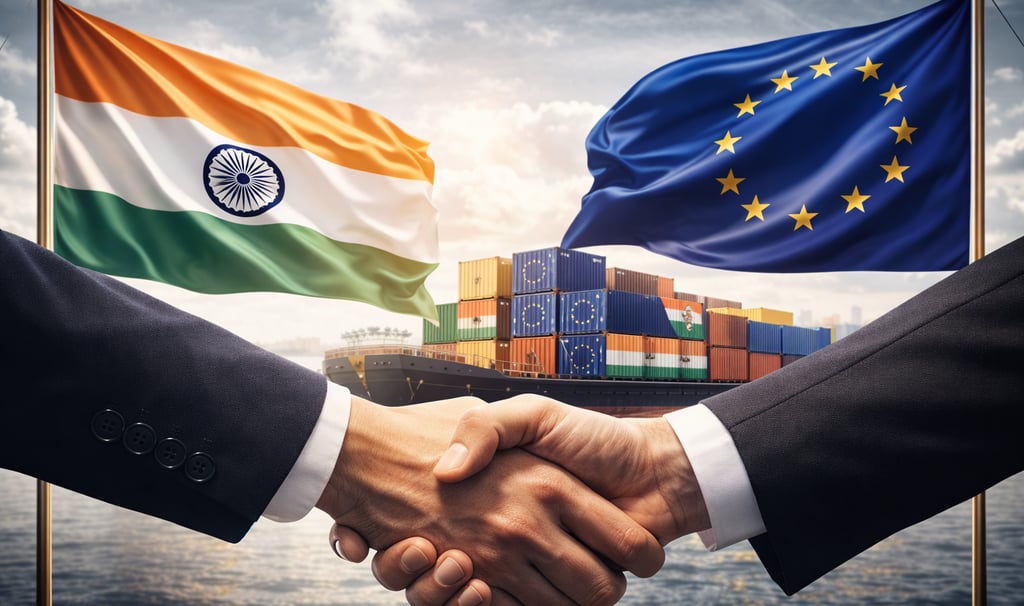

India and the EU have completed negotiations on a monumental free trade agreement (FTA), dubbed the "mother of all deals," which is expected to be announced around the 27th of January 2026, during the EU-India summit in New Delhi. This agreement, reached after nearly two decades of negotiations, aims to eliminate tariffs, increase bilateral trade (now valued at $136-190 billion per year), and expand markets for 2 billion people. It comes amid uncertainty over US tariffs, placing the EU as a key alternative for Indian goods.
Deal Overview
The FTA will eliminate or reduce tariffs on goods, facilitate service trade, and encourage foreign direct investment and professional mobility. India plans to lower import levies on select EU luxury cars (above €15,000) from 110% to 40%, and eventually to 10%, helping corporations like BMW and Mercedes. The EU gains easier access to India's market for premium items, wine, and renewable energy while excluding sensitive areas like agriculture.
Key Sector Benefiting India
Export-oriented Indian industries stand to gain most from lower EU tariffs (up to 10-150% currently) and easier compliance.
Textiles/garments: Tariffs drop to near-zero, boosting hubs and jobs.
Pharma/chemicals: Regulatory alignment increases generic drug and specialty chemical exports.
Auto components: Easier exports of engines, parts, and tires; potential EU manufacturing influx.
IT/telecom/financial services: Visa easing and reduced US reliance could lift services exports 3-5% yearly.
Leather/footwear, machinery, petroleum: MSME-led growth via diversified markets.
Stock Market Impacts
The deal boosts optimism for the Nifty 50, perhaps spurring a rally due to greater earnings, rupee strength (to 88-89/USD), and FDI inflows. Export equities may have long-term growth, but protected domestic sectors face competition dangers.
Risks and Outlook
The challenges include staggered implementation, geopolitical concerns, and FII outflows; agriculture and dairy remain protected. Bull case: Nifty gap up on announcement, export earnings rise; bear case: Volatility if US-China trade tensions worsen. Overall, it helps India diversify its exports, perhaps creating jobs and achieving 4%+ export growth, as previous FTAs have.
Follow us on


Smart Money Management is a finance platform dedicated to helping people make smarter decisions about earning, investing, and managing money.
Quick Links
Contact Us

smm@smartmoneymanagement.site
© 2026 Smart Money Management. All Rights Reserved