
Indian Markets Crash Amid War Fears
Early in March 2026, the Indian stock market saw a severe crash. In just two days, the Nifty plunged below 24,500, and the Sensex fell more than 1,100 points, eroding ₹11 lakh crore. Fears of a war in West Asia caused oil prices to rise by 7%, which led to panic selling in banks, automobiles, IT, and large equities like Reliance.
MARKET NEWS
Harsh Garg
3/4/20261 min read
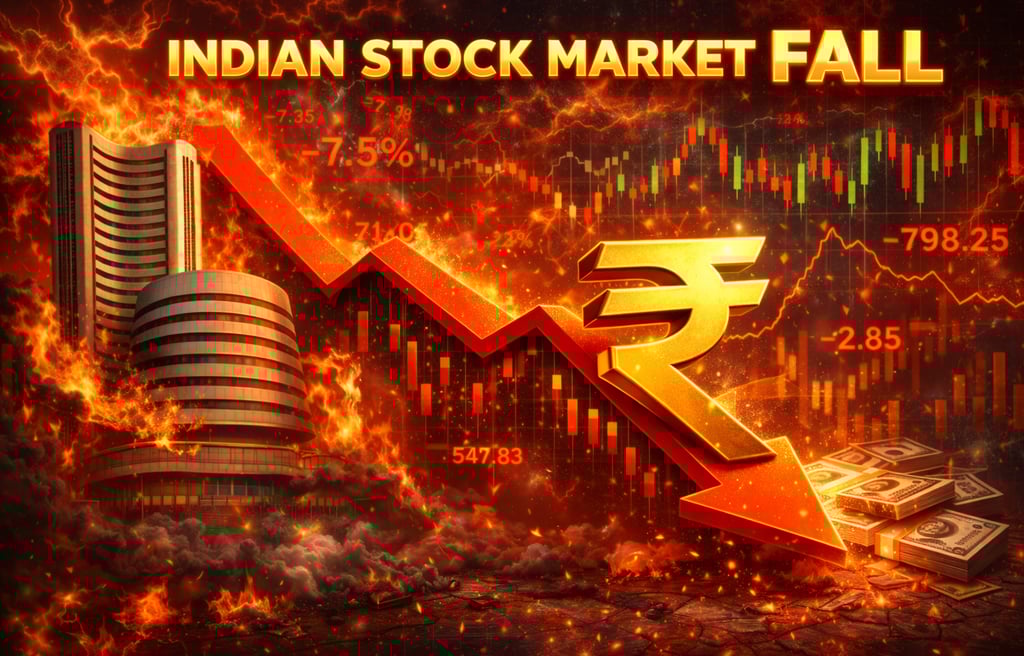
Early in March 2026, growing tensions in West Asia caused a severe decline in Indian stock markets. Trillions of dollars in investor capital were lost when major indices like the Sensex and Nifty fell more than 1,000 points in a single day.
Recent Market Drops
On March 3, the Nifty dropped below 24,500 while the BSE Sensex dropped 1,122 points, or 1.4%, to settle at 79,116. Earlier on March 2, the Nifty fell more than 500 points while the Sensex fell up to 2,744 points intraday, losing ₹6.8-8 lakh crore in value. Due to continuous volatility, markets have now lost more than ₹11 lakh crore in just two days.
Main Causes
Fears of a bigger war were raised by the geopolitical turmoil in the Middle East, which included strikes between Israel and Iran and US involvement. Oil and gas, automotive, and aviation industries were negatively impacted by the more than 7% increase in crude oil prices to multi-month highs. The rupee declined, international cues increased pressure, and foreign investors made large sales (₹7,536 crore in a single day).
Impact on Sectors and Stocks
Automobiles, consumer durables, IT, banks, and real estate all saw declines of one to three percent. Indexes were lowered by heavyweights including Reliance, L&T, Maruti, Adani Ports, and M&M. Many of the more than 3,400 equities dropped to 52-week lows.
Broader Effects
The Nifty Bank fell 1%, and real estate surged 2% as a result of widespread selling brought on by investor concern. Rising oil makes the RBI's battle against inflation more difficult and could postpone rate reductions. Until tensions in the Middle East subside and oil lines like the Strait of Hormuz remain accessible, markets will be more cautious.
Follow us on


Smart Money Management is a finance platform dedicated to helping people make smarter decisions about earning, investing, and managing money.
Quick Links
Contact Us

smm@smartmoneymanagement.site
© 2026 Smart Money Management. All Rights Reserved