
Middle East Tensions Rise Again
Middle East tensions rise again, with failed US-Iran talks and Strait disruptions, spiking oil to $105, crashing Sensex and Nifty
MARKET NEWS
Harsh Garg
4/13/20262 min read
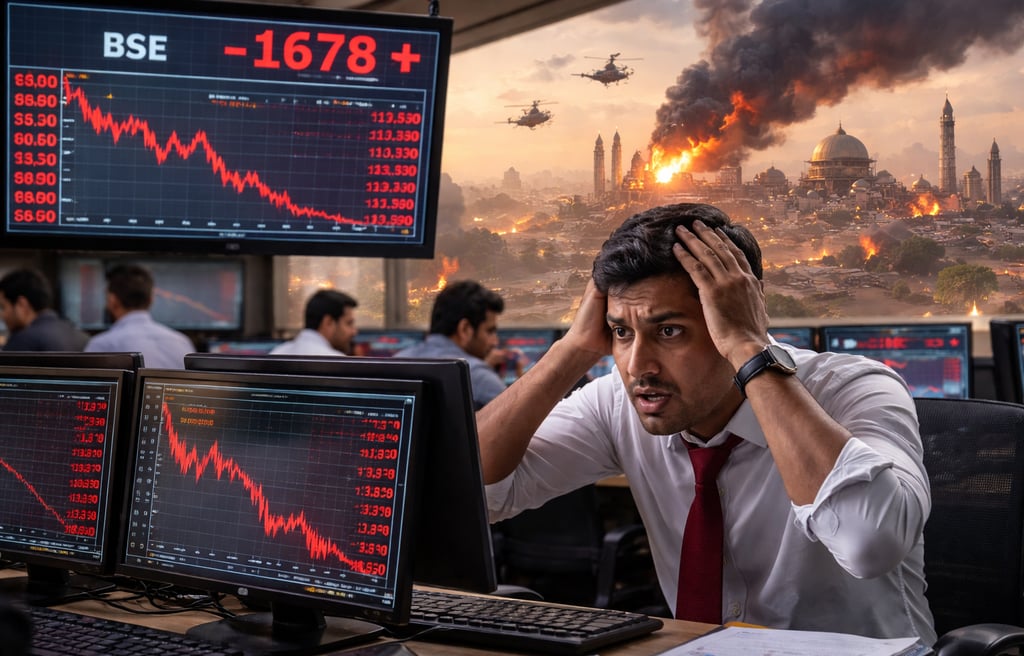
The Indian stock market is experiencing new instability due to rising tensions in the Middle East, because of unsuccessful peace negotiations between the United States and Iran and problems in the Strait of Hormuz. India, a significant oil importer, is affected by rising petroleum prices and instability in the world.
Current Middle East Situation
Joint US-Israeli attacks against Iran's nuclear program, missile facilities, and leadership in late February 2026 marked a dramatic escalation of the conflict and resulted in the deaths of key officials such as Supreme Leader Ali Khamenei. Iran retaliated by attacking US bases, Israel, and the Strait of Hormuz, a vital oil route that transports 20% of the world's supply. At the beginning of April, the ceasefire broke down, with Israel attacking Lebanon and Iran stopping shipments; negotiations in Islamabad failed, raising concerns of a larger conflict. Today, 13 April 2026, as oil prices surpass $105 per barrel, President Trump threatens severe action if Iran breaks the agreement.
Why Does It Hit the Indian Stock Market
Since more than 80% of India's oil is imported, any problems with supply drove up prices. Crude spikes increase inflation, devalue the rupee, and increase the trade imbalance. During times of market volatility, foreign investors withdraw from volatile emerging markets such as India. Higher fuel costs hurt industries like aviation, automobiles, and chemicals, and banks are under pressure to make loans.
Recent Market Moves
This month, Indian indexes fluctuated significantly. Following a ceasefire hope, the Nifty surged 5.9% above 24,000, and the Sensex recovered, reversing a six-week decline. However, it was overturned by ceasefire cracks: Early on 13 April, the Nifty fell below 23,600, and the Sensex fell 1,485 points (1.91%) to 76,065. Trump's comments caused the Sensex to drop 538 points to 77,024 on 9 April, while the Nifty dropped 0.48% to 23,881.
What's the Future
Previous conflicts, such as the Gulf War in 1990 or the Iraq War in 2003, saw temporary declines but 24–80% increases in the Sensex over 12 months as India's macroeconomy recovered. Monitor oil at $100+, FII flows, and US policy; the RBI may adjust rates to combat inflation. Until the cease-fire or Strait reopens, volatility will continue; reduce debt-heavy bets and remain cautious in oil and military.
Follow us on


Smart Money Management is a finance platform dedicated to helping people make smarter decisions about earning, investing, and managing money.
Quick Links
Contact Us

smm@smartmoneymanagement.site
© 2026 Smart Money Management. All Rights Reserved