
RBI's New Deposit Rules
RBI introduced new deposit rules in 2025 for clearer interest on fixed deposits, easier withdrawals, auto-renewal reminders, enhanced basic savings accounts, and mandatory nominations from November 2025 to protect customers and families.
MARKET NEWS
Harsh Garg
12/5/20253 min read
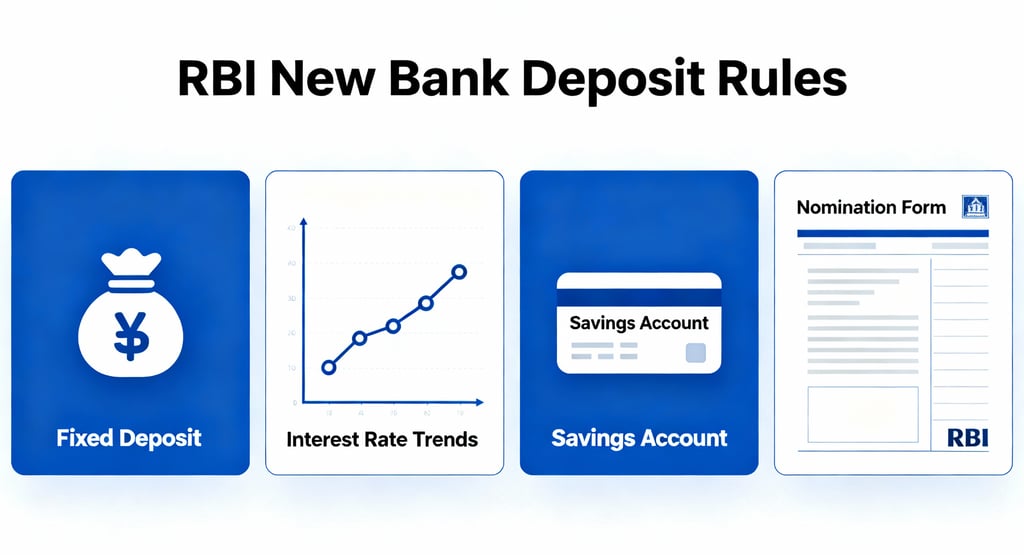
In 2025, the Reserve Bank of India revised its deposit regulations to enhance uniformity, client protection, and transparency across banks and deposit-taking organisations. These modifications primarily affect early withdrawal restrictions, auto-renewal procedures, nomination requirements for deposit accounts and lockers, and interest payments on savings and fixed deposits.
Key Changes in Fixed Deposit Rules
Depositors will find it easier to understand how interest is computed and paid on various types of deposits, as per the RBI's 2025 Interest Rate on Deposits Directions, which consolidate all previous rules into a single comprehensive framework. When deposits are renewed after maturity, the rules specify how interest will be paid, particularly if the renewal occurs within 14 days of the maturity date. The new regulations tighten standards on early withdrawal and shorten the required maturity notification period for NBFCs and home finance businesses, while permitting some leeway in true emergencies.
Premature withdrawal guidelines now specify when banks or NBFCs may waive or lower penalties, especially during the first three months following a deposit, as long as certain requirements are met. To prevent customers from being taken aback by reduced returns or unannounced fees, the RBI has also placed a strong emphasis on more transparent communication of interest rates, penalties, and renewal options at the time of FD booking.
Rules on Overdue and Auto--Renewed Deposits
The new framework standardises the way banks deal with past-due fixed deposits and post-maturity renewals. The interest rate that applies will be the lower of the rate on the original maturity date or the actual renewal date if a depositor renews an FD within a brief grace period after maturity (up to 14 days in many situations), which reduces the possibility of disputes. In order to maintain transparency in the handling of such funds, banks must establish explicit internal policies for interest on past-due deposits and credit such interest separately for lengthier overdue periods.
In addition, the RBI has raised expectations for auto-renewal, a situation in which a large number of unclaimed deposits build up over time. To prevent depositors and their families from losing track of previous FDs, banks are urged to ask for clear instructions, issue reminders close to maturity, and refrain from permanent auto-renewal without new authorisation. Better conduct guidelines have also emphasised customer education regarding noting deposit data and sharing it with family members or nominees.
Basic Savings Account and Deposit Services
Under updated conduct standards, the RBI has improved the features of Basic Savings Bank Deposit (BSBD) accounts for small consumers, making them more inclusive and helpful. In order to lower the cost of basic banking for low-income consumers, BSBD accounts will now normally enable unlimited deposits per month and offer debit or ATM cards without issue or renewal fees. Additionally, the RBI has made it simpler for current savings accounts to be converted into BSBD accounts. This process requires no initial deposit and can be completed in a set amount of time upon client request.
These modifications are intended to guarantee that basic accounts continue to provide consumers with access to necessary services like electronic transfers, ATM withdrawals, and basic check capabilities while remaining operating as low-cost, zero-frills solutions. The central bank is attempting to strike a compromise between the objectives of financial inclusion, reasonable fees, and ethical banking practices for disadvantaged groups by extending BSBD functionalities.
New Nomination Requirements from November 2025
Under the modified Banking Laws and associated RBI regulations, new nomination requirements for deposit accounts, lockers, and safe custody items will take effect on 1 November 2025. For all qualifying deposit accounts and locker arrangements, banks must offer and actively record nomination, making sure that information is accurately documented in account forms, passbooks, receipts, or digital statements. Customers can formally add, modify, or withdraw nominations, and banks must keep accurate records to facilitate a more seamless payment to nominees following the death of the account holder.
The goal is to make nomination a routine component of establishing and sustaining deposit relationships, as well as to lessen legal issues and delays in releasing funds or locker contents to families. These regulations are meant to safeguard depositors' heirs and enhance general consumer protection in the banking system because regulators have noted that many unclaimed deposits and locker disputes result from missing or ambiguous designations.
What Depositors Should Do Now?
In order to comprehend the revised interest, renewal, and early withdrawal requirements under the 2025 directives, depositors should examine all current savings, current, and fixed deposits. In view of the changing interest-rate cycle, it is particularly crucial to review maturity dates, auto-renewal instructions, and penalty clauses. You should also consider whether to lock in current rates or remain flexible. In order to comply with the new regulations that will take effect in November 2025, customers should also confirm that nominations are correctly registered for each deposit and locker and update this information as needed.
Investors should compare not just the headline interest rates for new deposits but also the fine language, including grace periods, how past-due deposits are handled, emergency choices, and fees associated with terminating or renewing FDs. Depositors can reduce unclaimed cash, avoid surprises, and make wiser judgments about where and how long to park their savings by keeping up with these regulatory developments.
Follow us on


Smart Money Management is a finance platform dedicated to helping people make smarter decisions about earning, investing, and managing money.
Quick Links
Contact Us

smm@smartmoneymanagement.site
© 2026 Smart Money Management. All Rights Reserved