
Rupee Hits All‑Time Low Against the Dollar
The Indian rupee recently hit an all‑time low of around ₹93 per US dollar, making imports, foreign travel, and studies more expensive for Indians.
MARKET NEWS
Harsh Garg
3/27/20262 min read
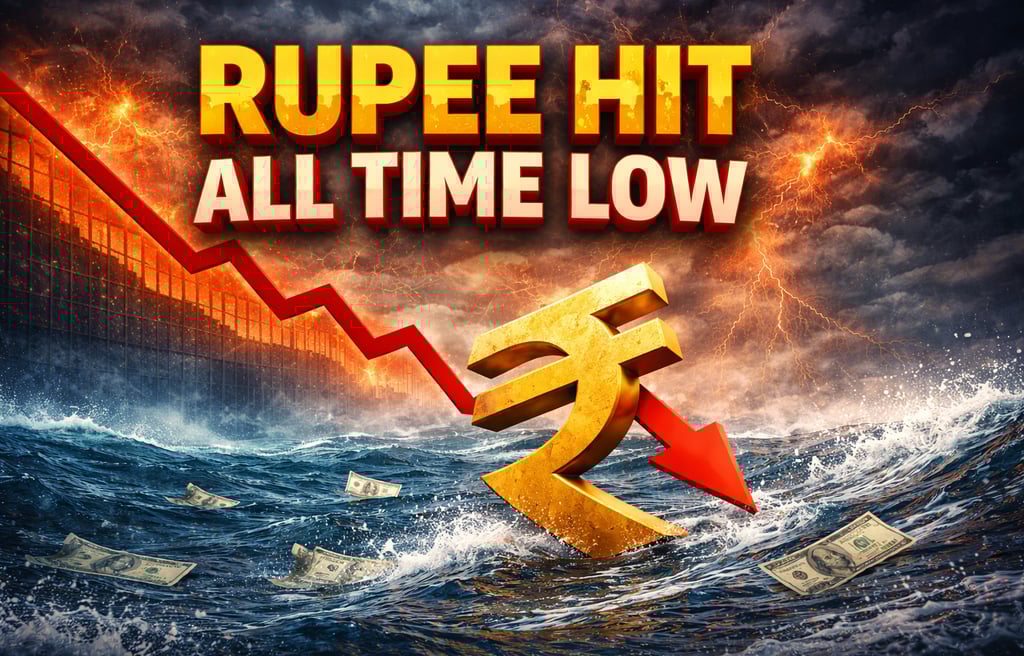

The Indian rupee recently reached an all-time low in compared to the US dollar, surpassing ₹93 per dollar for the first time in March 2026. This indicates that the rupee has weakened in the international market since you now need more rupees to purchase one US dollar than you did previously.
Why the Rupee is Weakening?
Global tension and safe havens: Investors are anxious about wars and conflicts, such as the escalating hostilities between the US, Israel, and Iran in early 2026. Emerging-market currencies like the rupee suffer during these periods because money typically moves into "safe" assets like the US dollar, gold, or US bonds.
High oil prices: India imports a lot of crude oil, so when the price of oil rises globally (to or above $100 per barrel), India must pay more in dollars, which raises dollar demand and weakens the rupee.
Outflows of foreign funds: Foreign institutional investors (FIIs) have been withdrawing dollars and selling Indian stocks, thereby raising dollar demand and devaluing the rupee.
Strong dollar worldwide: The US dollar index has been near multi-month highs, indicating the dollar is strong across the board. This puts pressure on emerging-market currencies, such as the rupee.
How Does This Affect the Common People?
Imports become more expensive: When the rupee declines, many items that India imports—such as oil, electronics, machinery, and even some medications—become more expensive since they are priced in dollars. Your monthly bills and inflation may increase as a result.
Travel and international education: When Indians travel overseas for vacation, medical care, or education, the same amount of rupees is worth less than dollars, making travel and expenses seem more costly.
Businesses that take out huge dollar-denominated loans: Indian businesses that take out large dollar-denominated loans may have to pay more in rupees, which could negatively impact stock prices and profitability.
(On the plus side, a weaker rupee can help exporters because their goods become cheaper in foreign markets, so some export‑oriented companies may benefit.)
Role of the Reserve Bank of India (RBI)
The RBI employs many strategies to try to prevent significant drops in the rupee:
Selling dollars from its foreign exchange reserves to boost the market's dollar supply.
Raising interest rates or implementing other monetary policies will maintain money coming to India and lessen currency panic-selling.
However, even the RBI can only halt the decline and cannot stop it entirely if global causes (war, oil surges, and a strong dollar) are extremely powerful.
What Might Happen in the future?
Experts caution that if global risks—such as geopolitical tensions, high oil costs, and a strong US dollar—continue, the rupee may remain under pressure for a long time. If these circumstances continue, some analysts have even speculated that the rupee would go closer to ₹100 per dollar. However, a reduction in international tensions, steady oil prices, and strong inflows into Indian markets may eventually aid in the rupee's partial recovery.
Simple Takeaway for You
An all-time low rupee signifies the following to an Indian investor or average person:
Foreign currency costs and imported goods will seem more expensive.
These days, global macro events—such as war, oil, and the strength of the dollar—rather than challenges unique to India are the primary motivators.
The length of time the rupee is weak, and the extent to which it impacts your savings and investments, can be determined by keeping an eye on inflation, interest rates, and RBI activity.
Follow us on


Smart Money Management is a finance platform dedicated to helping people make smarter decisions about earning, investing, and managing money.
Quick Links
Contact Us

smm@smartmoneymanagement.site
© 2026 Smart Money Management. All Rights Reserved