
SEBI Cuts Mutual Fund Fees
SEBI has lowered mutual fund fees and improved cost transparency for investors starting 2026.
MARKET NEWS
Harsh Garg
12/19/20252 min read
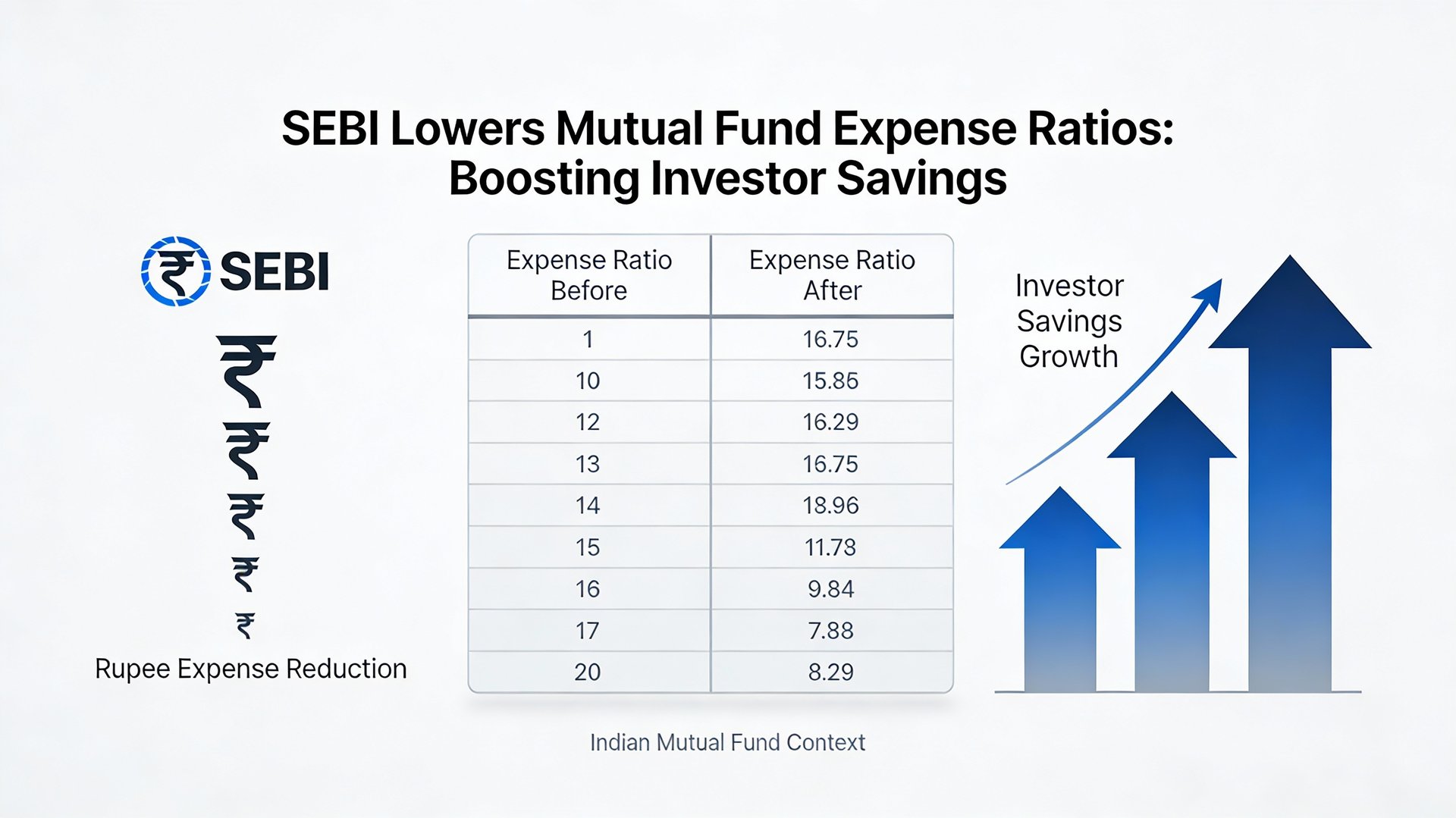
A reduction in mutual fund fees has been authorized by SEBI, making plans slightly less expensive for investors starting in 2026. Headline Many debt and equity funds have lowered their Total Expense Ratios (TERs) by about 10 to 15 basis points, and the lower caps are now more closely correlated with the amount of the fund's assets. To make mutual fund expenses more transparent and simpler for investors to compare across schemes, statutory levies like STT, GST, stamp duty, and SEBI fees will no longer be bundled inside the TER but will instead be presented and charged individually.
What exactly has changed?
The maximum TER slab for equity-oriented schemes has been reduced, for instance, from roughly 2.25% to about 2.10% for smaller funds and to less than 1% for extremely big schemes. In contrast, the TER range for debt funds has been tightened to 0.70–1.85% based on AUM.
The base TER cap for closed-ended equity funds is now 1% (formerly 1.25%), and non-equity closed-ended funds likewise have lower caps, bringing them closer to their open-ended counterparts.
To help investors understand where every rupee is going, SEBI has further highlighted that TER will be reported as three distinct components: base expense, brokerage/transaction expenses (within restrictions), and statutory/regulatory levies on actuals.
Why SEBI has done this
As the industry's AUM has increased dramatically, the regulator's objective is to transmit economies of scale to investors while streamlining a fee structure that had grown complicated and confusing over time.
Long-term investor returns are directly increased by lower ongoing costs, particularly for big, long-holding SIP portfolios. SEBI wants mutual funds to continue being a desirable, affordable option for household savings.
Impact on investors AMCs
Even a 10–15 basis point reduction can result in significant additional wealth for investors over a long period of time, especially in equity and hybrid schemes where compounding amplifies modest yearly savings.
When the fee overhaul was proposed, asset management company (AMC) stocks initially declined. However, they later recovered when the final cuts proved to be less severe than anticipated and SEBI permitted some flexibility, such as performance-linked TER options and slightly higher limits for smaller AMCs to safeguard their viability.
What investors should do now?
The increased TERs will be immediately reflected in scheme NAVs once fund houses implement them, and details will appear in updated scheme information materials and factsheets, so existing mutual fund investors do not need to take any immediate action.
However, investors should double-check the most recent expense ratios when comparing funds, particularly actively managed equity schemes versus index funds and ETFs, since SEBI's modifications may make less expensive options even more competitive.
Follow us on


Smart Money Management is a finance platform dedicated to helping people make smarter decisions about earning, investing, and managing money.
Quick Links
Contact Us

smm@smartmoneymanagement.site
© 2026 Smart Money Management. All Rights Reserved