
Supreme Court Blocks Trump Tariffs
US Supreme Court struck down Trump's broad tariffs as illegal on Feb 20, 2026, easing high duties on Indian exports like textiles (18-25%). Now, a temporary 10% tariff applies to India for 150 days from Feb 24, boosting short-term trade but with future uncertainty.
MARKET NEWS
Harsh Garg
2/21/20262 min read
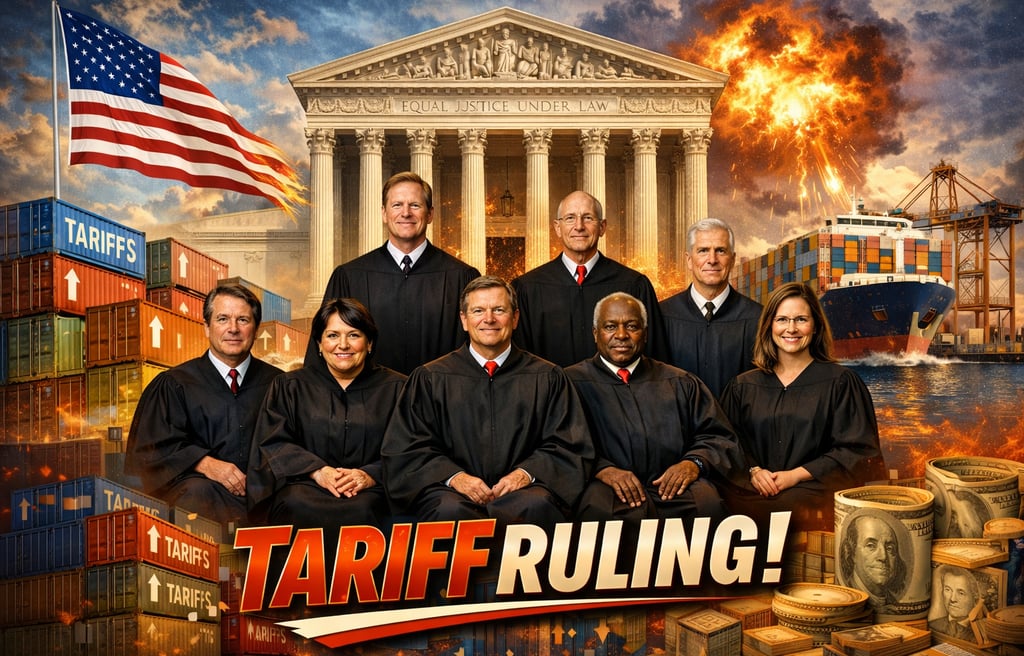
The US Supreme Court recently decided against President Trump's wide tariffs, concluding that they went beyond his authority under a crucial law. This ruling had a mixed impact on India's exports to the US, eliminating several tariffs but imposing new temporary ones.
The Supreme Court Ruling
On 20 February 2026, the court ruled 6-3 that President Trump was not permitted to apply broad tariffs on imports from many different countries under the International Emergency Economic Powers Act (IEEPA). Despite being intended to safeguard US industries, these tariffs were viewed as an overreach without the consent of Congress. The majority of those duties are declared invalid by the verdict, which could result in US importers receiving refunds totalling more than $175 billion.
Why Tariffs Were Imposed
Since taking office again in 2025, Trump has primarily utilized tariffs to correct trade imbalances and increase US manufacturing. He referred to them as "reciprocal" to mirror the levies that other nations impose on US goods. The court ruled that the use of IEEPA for such extensive tariffs was excessive, as no previous president had done so.
India's Trade Ties with US
Under recent US-India agreements linked to these policies, India was subject to increased taxes, such as 18–25%, on exports such as textiles, chemicals, machinery, and leather. With annual sales in the billions, the US is a major market for Indian goods. In exchange for lower US taxes, pre-ruling agreements sought to reduce India's purchases of Russian oil.
Direct Effects on India
In place of the higher rates from previous accords, tariffs on Indian imports will now be reduced to a flat 10% for 150 days beginning 24 February 2026. For Indian exporters in industries like clothing and plastics, this short-term reduction lowers costs. But it raises questions since the US might subsequently demand new agreements or prices.
Broader Economic Impact
In the short term, lower tariffs could increase Indian exports, supporting jobs in export hubs and assisting previously hard-hit sectors. Indirectly helping Indian businesses through improved cash flow, US importers may receive reimbursements for previous purchases. However, if India fails to meet US demands on energy or other concerns, ongoing trade talks could result in heavier taxes. There may be pressure on India's trade surplus with the US.
Future Outlook
In an effort to encourage allies like India to honor agreements, the White House intends to utilize other legislation for long-term tariffs. Trump promised speedy remedies but referred to the decision as a setback. According to experts, India may review its trading system in light of this change in order to lock in profits. After 150 days, keep an eye out for any fresh US orders.
Follow us on


Smart Money Management is a finance platform dedicated to helping people make smarter decisions about earning, investing, and managing money.
Quick Links
Contact Us

smm@smartmoneymanagement.site
© 2026 Smart Money Management. All Rights Reserved